
The Evolution of Digital Asset Infrastructure with Mike Belshe of BitGo
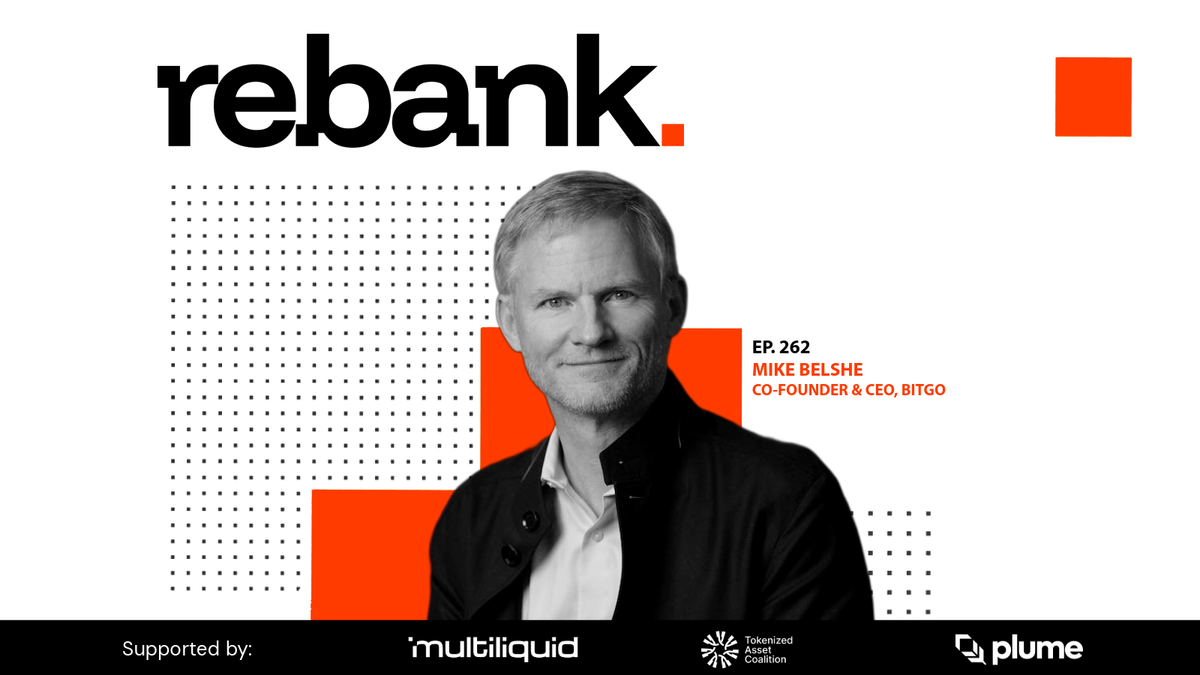
“We now have software inside our money. Stablecoins are 100% reserved, 24/7, and global. It’s simply a better model once you have the technology.”
Rebank is sponsored by:

Mike Belshe is the Co-Founder and CEO of BitGo, a digital asset infrastructure company serving institutions across custody, trading, staking, and stablecoin services. A veteran technologist whose early career included engineering roles at Netscape and Google, Mike has spent the last decade building the foundational infrastructure for crypto’s institutional adoption.
Founded in 2013, BitGo began as a secure wallet provider and has since evolved into a federally chartered digital asset trust company with global regulatory reach. Today, the firm operates across multiple jurisdictions, offering a full-stack platform that combines self-custody technology, regulated custody, and crypto-as-a-service infrastructure for banks, fintechs, and asset managers.
As tokenization reshapes financial markets and stablecoins challenge traditional banking models, Mike is focused on advancing a more transparent, resilient, and globally accessible market structure: one that blends blockchain innovation with regulated financial services.
Please enjoy the following insights from Mike Belshe of BitGo.
CLARITY Unlocks Institutional Crypto Adoption
Mike argues that passing CLARITY is the single most important step banks can take to participate in digital assets. While major asset managers, from BlackRock to Fidelity, are moving aggressively into tokenization and blockchain infrastructure, banks risk being left behind without clear market structure legislation. With CLARITY, institutions can confidently enter the space; without it, they face regulatory uncertainty that limits innovation and growth.
🎬 Watch: Why CLARITY Is Critical for Banks and Crypto
youtube.com/shorts/JWl9WrzLEms
Institutional Crypto Is Accelerating — Now That Regulators Are On Board
Mike highlights how firms like Fidelity were early to recognize Bitcoin’s institutional potential, entering the space in 2016 to offer custody to clients. But traditional financial institutions move deliberately, balancing innovation with regulatory and risk constraints. With staking's position now clarified by the SEC and regulatory posture shifting, major asset managers are accelerating into digital assets, expanding beyond Bitcoin into broader blockchain-native services.
🎬 Watch: How Regulation Is Unlocking Institutional Crypto Growth
youtube.com/shorts/dHTcVzjw9zw
Do Stablecoin Banks Need FDIC Insurance?
Mike challenges the assumption that every bank needs FDIC insurance. Traditional depository banks require insurance because they operate on a fractional reserve model, lending out deposits and taking balance sheet risk. But a fully reserved, stablecoin-based bank holds assets 1:1 and doesn’t engage in deposit lending. In that model, there’s no need for an insurance backstop, because there’s no underlying credit risk to insure.
🎬 Watch: Rethinking Banking in a Stablecoin Era
youtube.com/shorts/AbgA68aOhA0
Banks Were Built for a Pre-Computer Era
Mike argues that traditional banks were designed for a world without computers. Historically, banks connected depositors and borrowers because there was no other scalable way to move money, assess credit, and settle transactions. Today, software and blockchain infrastructure can perform those same functions more directly, without tightly coupling deposits and lending inside a single institution.
🎬 Watch: Why Technology Changes the Role of Banks
youtube.com/shorts/CeNXcOeaLVg
🎬 Watch the Full Episode
Enjoyed this conversation?
Upgrade to Premium for access to all our content and analysis.